Showing posts with label #strategy. Show all posts

Thursday, 14 April 2022

How to Make Decisions


This post's podcast episode is available at SounderApple PodcastsGoogle PodcastsStitcher and Spotify.

When you are short of time, here is the one action that will give you 80 percent results in 20 percent of the time.

DO THIS

Choose the best option that leaders support.


BY DOING THIS

–        Assess the pros and cons of three options.

–       Select the one that delivers the best outcomes.

–        Discuss your choice with leaders and make adjustments if required to gain united support.

Your most important change activity is to help leaders make decisions. Showing them the implications of their options will lead to better and more supported choices. Often, decisions must be made quickly, either because there is little time to discuss new information or something has gone wrong. Listing pros and cons is a fast way to review options in the context of your objectives. Identify three options and note the pros and cons of each. Doing nothing may be a good option to assess because it evaluates the speed of action. Choose the option that best moves you toward achieving your goals. 

Once you’ve identified the best option, share it with leaders and implement it if you have their support. If not, make modifications until all leaders support it. Sometimes, you’ll need to pivot to another option if they reject your first pick. If this happens, try to build in some elements of your best option to increase the probability of its success. 


KNOWLEDGE BITES


DECISION COMPARISON TOOL: How will I make a decision?

SUCCESS TIP

Informally (verbally) test your best option with key leaders. You can then incorporate their feedback before formally presenting.

For more stories, insights and advice, listen to the Decision Making podcast episode with board member, breakthrough consultant and executive and team coach Stephanie Wilkes.

Phil Buckley is the author of Change on the Run and Change with Confidence, host of the Change on the Run Podcast, and co-creator of the Sharing Change with Confidence Newsletter.

#change #changemanagement #transformation #leadership #projectmanagement #decisionmaking #podcasts

Thursday, 24 February 2022

How to Leverage Your Existing Culture

 This post's podcast episode is available at SounderApple PodcastsGoogle PodcastsStitcher and Spotify.

When you are short of time, here is the one action that will give you 80 percent results in 20 percent of the time.

DO THIS

Link project success to an established behaviour people are proud of.


BY DOING THIS

–        Review the positively recognized behaviours of your culture.


–        Identify the single most important one that will help drive the change.


–        Ask leaders to communicate the need for this behaviour to successfully adopt the change.


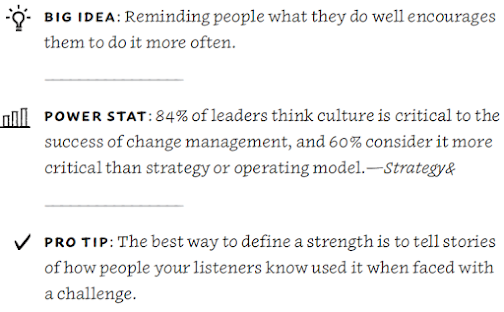
An organization's culture describes how work gets done. It’s a collection of attitudes, practices and behaviours that dictate how people treat each other. An organization’s culture is also a source of strength you can tap into because it’s familiar, deeply rooted and has emotional connections with people.

The most effective way to leverage your existing culture is to link the success of your project with a recognized strength of your culture. For example, if you have a fast decision-making culture, you could remind people of their ability to be agile and its importance to the success of the project. This connection will instill confidence in people’s skills and encourage the demonstration of them as they take on the change.


KNOWLEDGE BITES


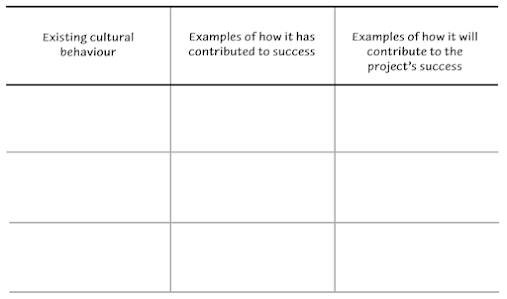
EXISTING CULTURE ASSESSMENT TOOL: How can my organizational culture make my project a success?


SUCCESS TIP

Give people a recent example of a person who exhibited the behaviour, and how that behaviour led to success. People will want to be the next positive example.

For more stories, insights and advice, listen to the Leveraging Your Existing Culture podcast episode with change management and transformation expert Sarah Smith.

Phil Buckley is the author of Change on the Run and Change with Confidence, host of the Change on the Run Podcast, and co-creator of the Sharing Change with Confidence Newsletter.

#change #changemanagement #transformation #leadership #projectmanagement #culture #podcasts

Sunday, 7 March 2021

How to Build Cross-functional Alliances


This post's podcast episode is available on SounderApple PodcastsGoogle PodcastsStitcher and Spotify.

When you are short of time, here is the one action that will give you 80 percent results in 20 percent of the time.


DO THIS

Position the project as an organization-wide initiative.


BY DOING THIS

–        Link your project to the general business strategy.

–        Demonstrate how it will benefit each function.

–        Ensure cross-functional participation on all key project teams.


In our digital world, cross-functional alignment is essential during change projects because everything is connected. All big changes require every business area to support them through new ways of working. 

Most large changes have different benefits and drawbacks for each part of the organization. This means you must motivate groups with diverse perspectives to collaborate, share information and follow your plan. 

Positioning your change as a company-wide initiative raises its importance and provides a strong rationale for allocating resources to it. Educating each group about the benefits they will get will help ensure that all stakeholders are represented throughout the implementation. 


KNOWLEDGE BITES


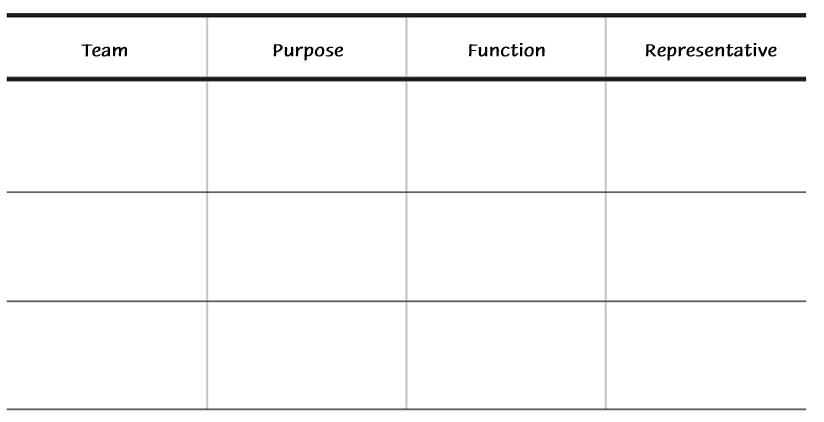
CROSS-FUNCTIONAL PARTICIPATION TOOL: What functions need to be on what project teams to ensure full participation?

SUCCESS TIP

Participation is easier to secure before the project team begins work.

The Change on the Run:44 Ways to Survive Workplace Uncertainty book is now available. Go to http://www.changeontherun.com or your favourite bookseller for more detail.

#changemanagement #changeleadership #change #management #business #leadership #projectmanagement #leadershipdevelopment #transformation #changeontherun

Developing a Business Case for Change


 This post's podcast episode is available on SounderApple PodcastsGoogle PodcastsStitcher and Spotify.

When you are short of time, here is the one action that will give you 80 percent results in 20 percent of the time.


DO THIS

Link your project to outcomes that leaders value.


BY DOING THIS

–        Identify the goals and strategies (set by leaders) your project can contribute to.

–        Estimate your project’s value based on input from internal experts and external reports.

–        Develop a story that illustrates these benefits.

A business case identifies the anticipated benefits of making a change and the investment required to implement it. Benefits include increased sales, profit and/or market share; decreased costs; greater customer service; and retention of talent. These gains need to be greater than the investment of resources required to secure them: money, time, skills and leadership attention.

The best business cases demonstrate how the proposed change will activate strategies chosen by leaders to achieve their goals. First, identify the published goals and strategies that the change can contribute to. Next, estimate the benefits and costs of your project as suggested by articles, case studies, etc. Finally, create a narrative that describes how the change will improve the organization.

Statistics by themselves do not make persuasive cases. Leaders and teams are more likely to support changes they can imagine. Painting pictures through stories and metaphors makes them tangible and relevant.


KNOWLEDGE BITES


BUSINESS CASE PLANNING TOOL: How can I justify my project?

SUCCESS TIP

Confirm with leaders that the objectives they previously set are still the most important to them.


The Change on the Run:44 Ways to Survive Workplace Uncertainty book is now available. Go to http://www.changeontherun.com or your favourite bookseller for more detail.


#changemanagement #changeleadership #change #management #business #leadership #projectmanagement #leadershipdevelopment #transformation #changeontherun

How to Build Your Confidence


This post's podcast episode is available on SounderApple PodcastsGoogle PodcastsStitcher and Spotify.

When you are short of time, here is the one action that will give you 80 percent results in 20 percent of the time.


DO THIS

Try to know more about the change initiative than most.

BY DOING THIS

–        Read the emails and study the presentations.

–        Set up a Google Alert for the type of change you’re involved in (e.g., adopting a new software program) to stay up-to-date on the latest information on the internet.

–        Participate in all relevant committees.


People perform at their best when they’re confident they’re doing the right thing. Without this confidence, their “fight, flight or freeze” response is triggered, and their thinking, actions and behaviours can be hijacked by the need for self-preservation. The best way to build your confidence is through knowledge. When you think, act and behave based on facts and data, you “know” what is probable versus guessing at what might be correct. Build your knowledge about the change by reading project plans and speaking with the project leader and team members (including consultants), so you know how to act and what to do.

Other organizations are going through similar changes. Learn from their experiences and apply this knowledge to your change project. Google Alerts will keep you current. Also, join project committees to expand your information sources. Soon, you’ll become an expert at your organization.


KNOWLEDGE BITES


CONFIDENCE VISUALIZATION TOOL: How will I look when I am speaking and sounding confident?

SUCCESS TIP

Practice these elements in a mirror to nail them before you need them!

The Change on the Run:44 Ways to Survive Workplace Uncertainty book is now available. Go to http://www.changeontherun.com or your favourite bookseller for more detail.

#changemanagement #changeleadership #change #management #business #leadership #projectmanagement #leadershipdevelopment #transformation #changeontherun

How to Change Your Culture


This post's podcast episode is available on SounderApple PodcastsGoogle PodcastsStitcher and Spotify.

When you are short of time, here is the one action that will give you 80 percent results in 20 percent of the time.


DO THIS

Convince leaders to identify and adopt the most important new behaviour that will enable the change.


BY DOING THIS

–        Identify the behaviour that will best enable the change.

–        Define how leaders will model it—what it looks, sounds and feels like.

–        Communicate stories of how leaders are demonstrating this behaviour.


All big changes require some form of culture change. This means modifying how people think, interact and behave. Your challenge is that these traits are deep-rooted and difficult to alter.

Since a culture is ultimately defined by leaders’ words, actions and behaviours, leaders must change themselves to change the culture. Identifying the most important new behaviour that will enable the change gives leaders and their teams a target to focus on. When leaders model this behaviour, they signal to employees the need to work differently to adopt the change. Profiling examples of leaders demonstrating new behaviours speeds up adoption by the people who report to or work with them. Furthermore, stopping a contrary behaviour quickens the transition toward the new one. For example, if collaboration across teams is the new behaviour, calling out information hoarding and poor communication reinforces the commitment to change how people work together.


KNOWLEDGE BITES


CULTURE CHANGE VISIONING TOOL: How will leaders demonstrate the most important new behaviour that will enable change?

SUCCESS TIP

Sharing an example of how the new behaviour contributed to a past success implies that some people already have it.

The Change on the Run:44 Ways to Survive Workplace Uncertainty book is now available. Go to http://www.changeontherun.com or your favourite bookseller for more detail.

#changemanagement #changeleadership #change #management #business #leadership #projectmanagement #leadershipdevelopment #transformation #changeontherun