Showing posts with label #changecommunication. Show all posts

Thursday, 24 March 2022

How to Respond to Adjustments


This post's podcast episode is available at SounderApple PodcastsGoogle PodcastsStitcher and Spotify.

When you are short of time, here is the one action that will give you 80 percent results in 20 percent of the time.

DO THIS

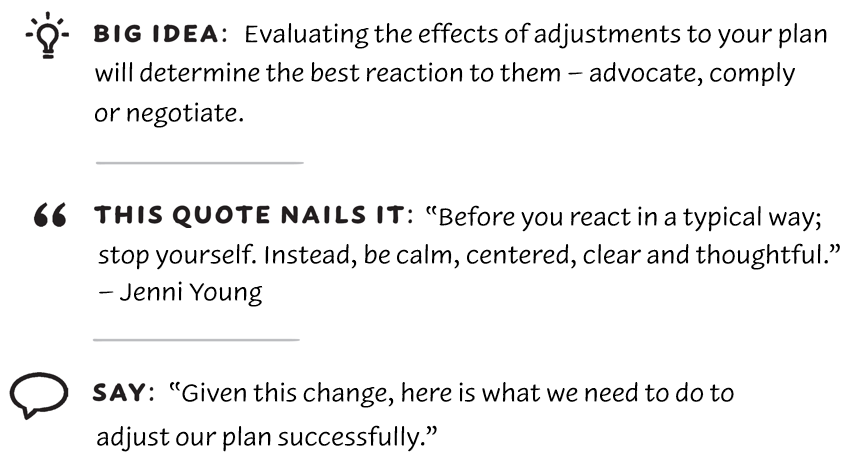
Assess how the adjustment will help or hinder progress.


BY DOING THIS

–      Determine how the change will affect your timeline, activities and resources required

–      Present your analysis to the project lead and manager

–      Negotiate how your plan will change to accommodate the change


Change initiatives generally involve continual revisions. Leaders request new activities, people modify their commitments, and new information emerges.  

Many people dive into accommodating the changes without assessing whether they help or hinder their success. Getting them done is more important than determining what is required to accommodate them. 

To assess an adjustment’s impact, estimate how it will alter the speed, level of difficulty or resources required. The answers will tell you if the change is positive, neutral or negative. If it’s positive, embrace the adjustment; if neutral, manage it with minimal effort; if negative, negotiate what resources or plan changes you need.


KNOWLEDGE BITES


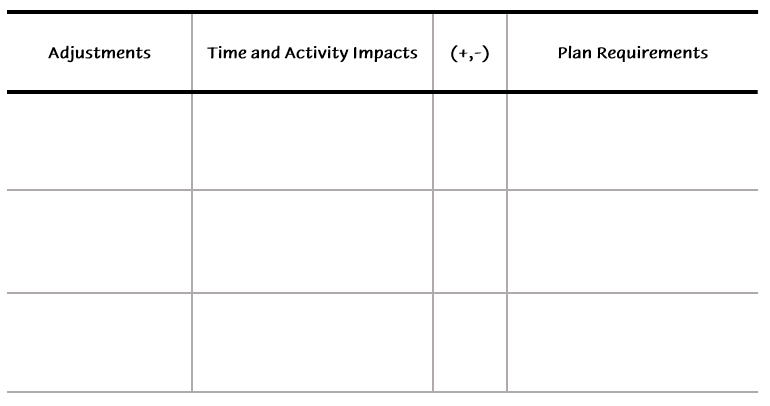
ADJUSTMENT ASSESSMENT TOOL: How will I assess adjustments to my plan?

SUCCESS TIP

The faster you present adjustments to your plan, the more valid they’ll be perceived.


For more stories, insights and advice, listen to the Responding to Adjustments podcast episode with change management not-for-profit leader Laura Oliver.

Phil Buckley is the author of Change on the Run and Change with Confidence, host of the Change on the Run Podcast, and co-creator of the Sharing Change with Confidence Newsletter.

#change #changemanagement #transformation #leadership #projectmanagement #agility #podcasts

Thursday, 1 July 2021

How to Tell People What to Expect


 This post's podcast episode is available at SounderApple PodcastsGoogle PodcastsStitcher and Spotify.

When you are short of time, here is the one action that will give you 80 percent results in 20 percent of the time.


DO THIS

Always be the best source of information.


BY DOING THIS

–        Communicate early and often.

–        Speak from the audience’s perspective.

–        Share everything you can, honestly (don’t spin).


Communication is the most important form of support people receive when going through a work transition. It’s also one of the biggest enablers of successful change because it aligns everyone on their understanding of what’s changing, why it’s necessary, how it will affect them and what they must do to adopt it. 

Setting up a frequent and consistent communication schedule creates the expectation that people will receive regular updates from leaders and the project team. Communicating honestly in ways that your audience can relate to creates the perception that these messages are the best sources of information. You must regularly communicate even when there is nothing new to share. If you don’t, rumours and speculation fill the void, and such counter-narratives will seem credible, distract people and increase anxiety.


KNOWLEDGE BITES


AUDIENCE PROFILE ASSESSMENT TOOL: What are my audience's communication preferences?


SUCCESS TIP

Test your messages with a few members of your audience to avoid (or at least be prepared for) adverse reactions.


The Change on the Run: 44 Ways to Survive Workplace Uncertainty book is now available. Go to http://www.changeontherun.com or your favourite bookseller for more details.

#changemanagement #change #management #business #leadership #personaldevelopment #engagement #communication #podcasts #changeontherun