Thursday, 14 April 2022

How to Make Decisions


This post's podcast episode is available at SounderApple PodcastsGoogle PodcastsStitcher and Spotify.

When you are short of time, here is the one action that will give you 80 percent results in 20 percent of the time.

DO THIS

Choose the best option that leaders support.


BY DOING THIS

–        Assess the pros and cons of three options.

–       Select the one that delivers the best outcomes.

–        Discuss your choice with leaders and make adjustments if required to gain united support.

Your most important change activity is to help leaders make decisions. Showing them the implications of their options will lead to better and more supported choices. Often, decisions must be made quickly, either because there is little time to discuss new information or something has gone wrong. Listing pros and cons is a fast way to review options in the context of your objectives. Identify three options and note the pros and cons of each. Doing nothing may be a good option to assess because it evaluates the speed of action. Choose the option that best moves you toward achieving your goals. 

Once you’ve identified the best option, share it with leaders and implement it if you have their support. If not, make modifications until all leaders support it. Sometimes, you’ll need to pivot to another option if they reject your first pick. If this happens, try to build in some elements of your best option to increase the probability of its success. 


KNOWLEDGE BITES


DECISION COMPARISON TOOL: How will I make a decision?

SUCCESS TIP

Informally (verbally) test your best option with key leaders. You can then incorporate their feedback before formally presenting.

For more stories, insights and advice, listen to the Decision Making podcast episode with board member, breakthrough consultant and executive and team coach Stephanie Wilkes.

Phil Buckley is the author of Change on the Run and Change with Confidence, host of the Change on the Run Podcast, and co-creator of the Sharing Change with Confidence Newsletter.

#change #changemanagement #transformation #leadership #projectmanagement #decisionmaking #podcasts

Friday, 25 March 2022

How to Reward Team Members


This post's podcast episode is available at SounderApple PodcastsGoogle PodcastsStitcher and Spotify.

When you are short of time, here is the one action that will give you 80 percent results in 20 percent of the time.

DO THIS

Recognize people’s efforts through small gifts.


BY DOING THIS

–        Identify milestones to recognize with gifts

–        Ask leaders to present the gifts at team meetings, highlighting the efforts that led to the achievements

–         Profile the next milestone’s tasks and express confidence they’ll be achieved


People have a need to be recognized for work that is meaningful and necessary for success. From recognition to gifts, rewards play an important role in maintaining morale, focus, and performance. They acknowledge people’s hard work and give them confidence in their future contributions.

Celebrating accomplishments with peers is especially effective because everyone knows how difficult the tasks were to achieve. Small gifts have symbolic value because they’re tangible reminders of the achievement and the organization’s appreciation for it. They also help the leader write a narrative about people’s efforts and their impact on success, positioning team members as protagonists rising to the challenge who will do so again in the future.

Being specific about how a person or team accomplished the task personalizes the recognition, making it more meaningful, especially when shared with friends and family (“My boss said that I saved the day.”)

Rewards that can be shared and enjoyed outside of work, like movie tickets or leaving early on a Friday, have the greatest impact. They communicate that people’s personal lives are important and haven't been forgotten by leaders.  


KNOWLEDGE BITES


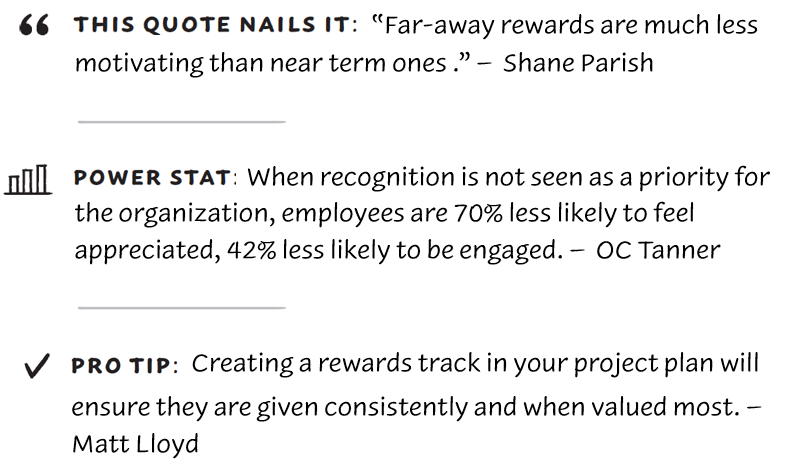
REWARDS PLANNING TOOL: What rewards will I give my project team?


SUCCESS TIP

Taking photos of the recognition ceremonies and sharing them broadly and visibly supercharge their meaning and impact.


For more stories, insights and advice, listen to the Rewarding Team Members podcast episode with CFO/COO and change leader Matt Lloyd.

Phil Buckley is the author of Change on the Run and Change with Confidence, host of the Change on the Run Podcast, and co-creator of the Sharing Change with Confidence Newsletter.

#change #changemanagement #transformation #leadership #projectmanagement #culture #podcasts

Thursday, 24 March 2022

How to Respond to Adjustments


This post's podcast episode is available at SounderApple PodcastsGoogle PodcastsStitcher and Spotify.

When you are short of time, here is the one action that will give you 80 percent results in 20 percent of the time.

DO THIS

Assess how the adjustment will help or hinder progress.


BY DOING THIS

–      Determine how the change will affect your timeline, activities and resources required

–      Present your analysis to the project lead and manager

–      Negotiate how your plan will change to accommodate the change


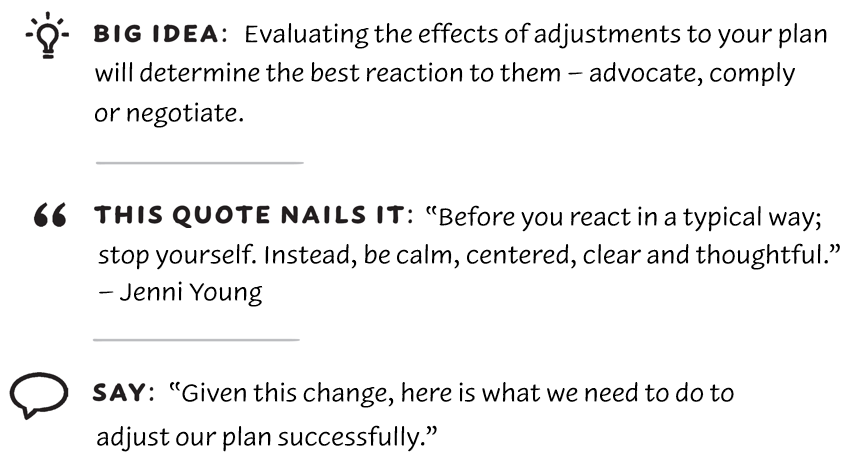
Change initiatives generally involve continual revisions. Leaders request new activities, people modify their commitments, and new information emerges.  

Many people dive into accommodating the changes without assessing whether they help or hinder their success. Getting them done is more important than determining what is required to accommodate them. 

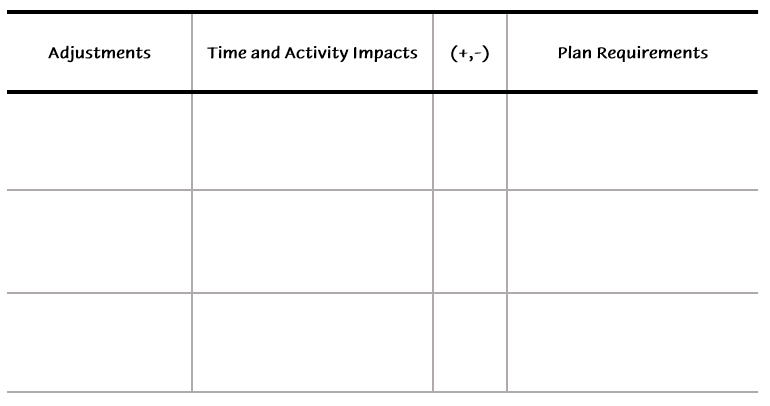
To assess an adjustment’s impact, estimate how it will alter the speed, level of difficulty or resources required. The answers will tell you if the change is positive, neutral or negative. If it’s positive, embrace the adjustment; if neutral, manage it with minimal effort; if negative, negotiate what resources or plan changes you need.


KNOWLEDGE BITES


ADJUSTMENT ASSESSMENT TOOL: How will I assess adjustments to my plan?


SUCCESS TIP

The faster you present adjustments to your plan, the more valid they’ll be perceived.


For more stories, insights and advice, listen to the Responding to Adjustments podcast episode with change management not-for-profit leader Laura Oliver.

Phil Buckley is the author of Change on the Run and Change with Confidence, host of the Change on the Run Podcast, and co-creator of the Sharing Change with Confidence Newsletter.

#change #changemanagement #transformation #leadership #projectmanagement #agility #podcasts

Thursday, 24 February 2022

How to Leverage Your Existing Culture

 This post's podcast episode is available at SounderApple PodcastsGoogle PodcastsStitcher and Spotify.

When you are short of time, here is the one action that will give you 80 percent results in 20 percent of the time.

DO THIS

Link project success to an established behaviour people are proud of.


BY DOING THIS

–        Review the positively recognized behaviours of your culture.


–        Identify the single most important one that will help drive the change.


–        Ask leaders to communicate the need for this behaviour to successfully adopt the change.


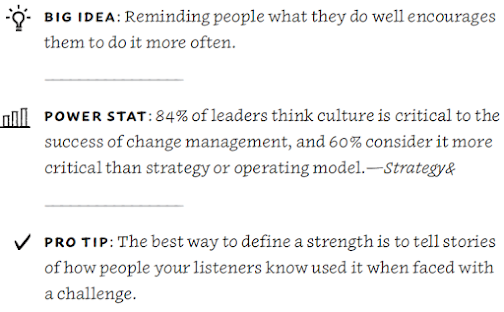
An organization's culture describes how work gets done. It’s a collection of attitudes, practices and behaviours that dictate how people treat each other. An organization’s culture is also a source of strength you can tap into because it’s familiar, deeply rooted and has emotional connections with people.

The most effective way to leverage your existing culture is to link the success of your project with a recognized strength of your culture. For example, if you have a fast decision-making culture, you could remind people of their ability to be agile and its importance to the success of the project. This connection will instill confidence in people’s skills and encourage the demonstration of them as they take on the change.


KNOWLEDGE BITES


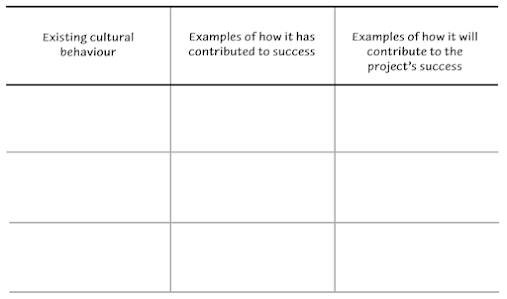
EXISTING CULTURE ASSESSMENT TOOL: How can my organizational culture make my project a success?


SUCCESS TIP

Give people a recent example of a person who exhibited the behaviour, and how that behaviour led to success. People will want to be the next positive example.

For more stories, insights and advice, listen to the Leveraging Your Existing Culture podcast episode with change management and transformation expert Sarah Smith.

Phil Buckley is the author of Change on the Run and Change with Confidence, host of the Change on the Run Podcast, and co-creator of the Sharing Change with Confidence Newsletter.

#change #changemanagement #transformation #leadership #projectmanagement #culture #podcasts

How to Identify Project Lessons Learned

This post's podcast episode is available at SounderApple PodcastsGoogle PodcastsStitcher and Spotify.

When you are short of time, here is the one action that will give you 80 percent results in 20 percent of the time.

DO THIS

Ask people to tell stories about what worked well and what could be improved.


BY DOING THIS

–        Select a few people from across all stakeholder groups.


–        Ask them to identify three things that worked well and three that could be improved (and why).


–        Share key themes and associated quotes at leadership and project closure meetings.


Managing the closing of a change project is hard because most leaders and project team members have mentally moved on to their next roles and challenges.

A lessons-learned exercise at the end of a change project is essential for building change capability in your organization. It documents which activities worked and should be repeated by other project teams, and which didn’t and shouldn’t.

The best lessons-learned reviews include members of all stakeholder groups, including leaders, project team members and those going through the change. Ask representatives of each group to write down three things that worked and three that didn’t—and ask them to detail why. Themes will emerge that are best explained by verbatim quotes from the feedback providers.

Scheduling a leader review meeting at the beginning of the project creates an expectation of measurement and a commitment to learning. Booking this meeting into calendars months in advance will increase the likelihood it will happen.


KNOWLEDGE BITES


LESSONS-LEARNED SUMMARY TOOL: What lessons can I learn from this project?


SUCCESS TIP

Holding brief lessons learned session weekly is the best way to maximize benefits and integrate learning into your culture.


The Identifying Project Lessons Learned podcast episode with change management expert Brendon Baker.

Phil Buckley is the author of Change on the Run and Change with Confidence, host of the Change on the Run Podcast, and co-creator of the Sharing Change with Confidence Newsletter.

#change #changemanagement #projectmanagement #transformation #leadership #lessonslearned #podcasts

Thursday, 27 January 2022

How to Optimize Your Limited Time


This post's podcast episode is available at SounderApple PodcastsGoogle PodcastsStitcher and Spotify.

When you are short of time, here is the one action that will give you 80 percent results in 20 percent of the time.


DO THIS

Support leaders when they’re making decisions.


BY DOING THIS

–      Know what decisions they’re making and when.

–      Ensure that leaders have accurate information on options.

–     Try to attend these meetings or follow up afterward.


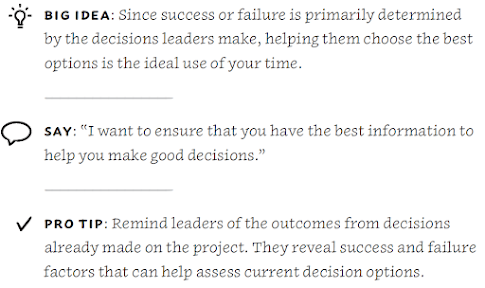
Most people have fewer resources to fulfill their change role than they need, and so must choose which activities are most important. Of all the tasks you need to perform, I suggest prioritizing spending time with leaders as they are making decisions. These moments will determine the success of your project and will define where your knowledge and experience are needed most.

Status meetings are crucial to the success of change initiatives because this is where leaders review progress, evaluate risks and make decisions, including on the allocation of resources. If you know what’s being decided at these meetings, you can influence what data is presented and what questions get asked. The better briefed leaders are, the better they will be at making the right decisions.


KNOWLEDGE BITES


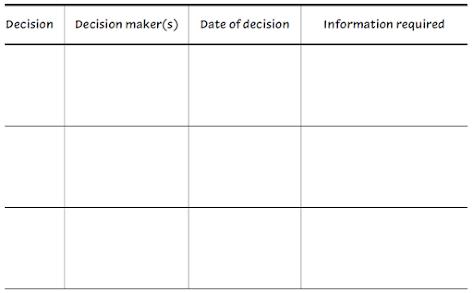
DECISION PLANNING TOOL: What decisions are project leaders making that will impact the success of the change?


SUCCESS TIP

If you don’t have access to the leader, give the information to someone they rely on for guidance.

The Optimizing Your Limited Time podcast episode with change management expert Yvonne Thevenot.

Phil Buckley is the author of Change on the Run and Change with Confidence, host of the Change on the Run podcast, and co-creator of the Sharing Change with Confidence Newsletter.

#change #changemanagement #transformation #business #timemanagement #leadership #management #podcasts