Showing posts with label business change. Show all posts

Friday, 9 August 2013

The Art and Science of Creating Something New

Our first Change with Confidence newsletter launched this week after six weeks of development.

This initiative is part art project and part science experiment. The selection of the articles that Mel, Tim and I made is the art; our commentary explaining why we selected them is the science. 

The most interesting part of creating the first issue was its design. Kro, my website developer, designed the template from rough drawings made in Powerpoint. He also added layout and design elements. Mel, Tim and I made revisions the same way we do on our consulting assignments - quickly, building on each other's thoughts.

We selected MailChimp as the vehicle to create, send and track our newsletter. It was Kro's program of choice. Also, I remember Michael Hyatt, an excellent business blogger, recommending it. 
MailChimp's website boasts 6,000 new users a day and we decided to become one of them.

MailChimp is powerful, flexible and easy to use, at least when you use it correctly. I had neglected to fill in the first and last name fields in the distribution database which resulted in blank salutations during our test run. It was an easy fix that required two hours of typing. It didn't feel easy at the time.

I really appreciate the feedback we received. Most of the notes were sent the day of distribution. There were many thanks, good ideas for future issues and offers to forward it to friends and colleagues. Some people even noted the articles they read.

Like all ongoing, repeatable projects, I am intrigued by how it will evolve. Will we make any immediate design changes, what articles will we select next time, will the tones of our commentary change? I know that each issue will be shaped by our interests, experiences and learnings, like all art and science.

Phil

Friday, 28 June 2013

The Only Entrance Requirement is Interest

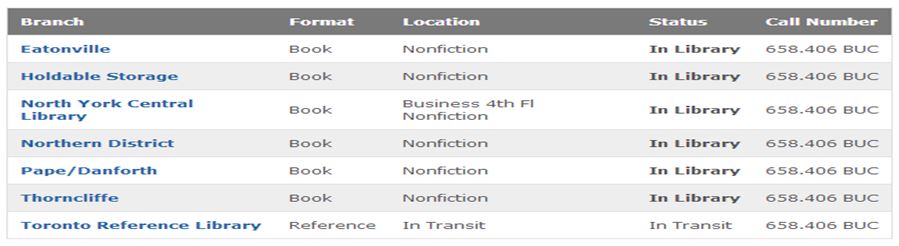
My sister-in-law, Ellen, sent me a text saying that Change with Confidence had been purchased by the Toronto Public Library system. Seven hard copies and one e-copy were catalogued in their on-line database, and the e-copy had already been reserved!

This is big news to me. A library bought my book. More people will now be reading it. I wrote a library book. Like other milestones, I thought, "This is a real book."

I am nostalgic about libraries. I remember as a boy signing-out books for school projects. As an adult, I searching through research manuals for publishers to pitch. I had a purpose and the library enabled me to accomplish it.

Toronto Reference Library
Home of Change with Confidence
Who will be using my book and how it will be used? Will people take notes, reference quotes, write in the margins or maybe even rip out pages instead of copying them (the horror)? Will someone owe fines for keeping my book past its due date? 

Mostly, I think about my book reaching a new audience. People with their own purposes using my book for free. Lady Bird Johnson said, "Perhaps no place in any community is so totally democratic as the town library. The only entrance requirement is interest."

Like most great opportunities, I am thinking about how to scale it. If one library system is interested in Change with Confidence, how do I engage others who may feel similarly. I have to believe there is lots of interest.

Phil

Friday, 21 September 2012

The Eagle Has Landed!

We did it! Last Tuesday, I met with my executive editor and editorial assistant to sign a global rights contract with Wiley for Change with Confidence. From their website: "Wiley has evolved into one of the world's more respected publishing and information services companies. We strongly believe in the enduring value of collaborative relationships, built in a solid foundation of trust and integrity." Perfect fit.


My book with be under the Jossey-Bass imprint. 
"Jossey-Bass publishes books, periodicals, and other media to inform and inspire those interested in developing themselves, their organizations and their communities." Another perfect fit!

Change with Confidence will be available worldwide in 6 x 9 trim size hardcover (and e-book) in March, 2013. I couldn't be more thrilled!

My new team members were very gracious and understanding about my excitement. I laughed when my executive editor said that in her twenty-seven year career, I was the first author to request a picture of the contract signing. Hilarious!

As I left the office, I was overwhelmed by feelings of gratitude for everyone who has helped me along the way, including those who have read this blog (you!). The intensity of appreciation is hard to capture in words. Perhaps it is best just to say "Thank-you from the bottom of my heart."

A new phase of my journey has kicked-off and I have a lot to do. Firstly, I need to read my manuscript one last time before I hand it over to the Wiley team on Monday. There are a few insights I have learned during my recent consulting assignments that I am keen to share with my readers.  The heat is on!

Thank you from the bottom of my heart.
Phil

Friday, 31 August 2012

To Infinity and Beyond!

I always thought my career could go in two directions after my book was published: consulting or corporate. Either I would apply the advice from Change With Confidence at my clients' or next employer's businesses. Robert Cialdini said "He who has the most options wins." Having two options is definitely better than one, or is it?

Having two options gives you choice but it also implies that you have not committed to one. When I shared my two options with someone in the publishing industry, she wondered if the corporate option would limit my ability to promote my book. She was right: I would be absorbed in the challenges of my new role and team. The consulting option is far more flexible. I can blend speaking engagements and other promotional activities with assignments, giving the required time to both.

This week, I committed to the book promotion/consulting option. I incorporated a company called Change With Confidence Incorporated ("Limited" and "Confidence" don't go together) that matches the business cards I purchased earlier.

When the security guard at a client's office asked what company I was from, I belted out "Change With Confidence!" Buzz Lightyear would have been proud. The security guard paused before writing it in his book. Change with Confidence Incorporated became official!

As I walked away, clipping my guest badge to my belt, I thought, "To infinity and beyond. That sounds about right." 

Phil

Friday, 8 June 2012

So, who is going to buy your book?

When I started writing my book, I had a clear picture of who would read it. They helped guide my content and formatting decisions, and knowing they are time-starved business people, anything that didn't provide quick access to practical advice was deleted. At least 30 percent of my first draft was edited out because it was not adding value. As I wrote my publisher's proposal, I realized there are other audiences that could gain from my book and that I would need to market to them when it becomes available. Here are my three audiences:


1. Leaders of Change (primary)
2. Teachers and Students of Change (secondary)
3. Cadbury and Kraft Enthusiasts (secondary)

Leaders of Change
Leaders and their teams working on big change projects, including executive sponsors (who fund and have overall accountability for projects), project managers (who run the day-to-day operations), and team members (who have project-specific roles).


Teachers and Students
Universities that offer change management/organizational development degrees and MBA programs (most include change management courses). My book includes 100 mini-case studies (fifty good practices and fifty poor practices), accommodates all four learning styles, has recommended actions that promote lecture discussion and assignments, and all content is based on practical experience.

Cadbury and Kraft Enthusiasts
Current and former Cadbury/Kraft employees. My book includes  forty-four mini-case studies on Cadbury and Kraft, almost all of which have never been published.

It excites me that these audiences will look at my book through different lenses and focus on what they find useful. Regardless of your intended destination, the reader is in the driver's seat.

Phil

Friday, 1 June 2012

On the Air

 I had the pleasure of co-presenting at the DRIVING CHANGE: What does it really take to succeed? event hosted by the Strategic Leadership Forum. It was exhilarating being in front of an audience again. Presenting has been a large part of my career and it felt like home standing in front of a great group of professionals. I also appreciate working with amazing co-presenters and organizers during the months leading up to the session. Being part of an engaged team is a privilege, which I miss. A party of one is not always a party.


Here are the "things to remember" I jotted down after the session:


On the air!
  - Think like the audience
  - It's about the stories
  - Less is more
  - Pictures are worth a 1,000 words
  - Props are good when used sparingly
  - Different perspectives work really well together
  - Preparation is key
  - There's so much to learn from everyone


Phil, Sheila Legon, Len Nanjad, and Gail Severini
A highlight happened just before my presentation. Someone I had worked with many years ago had sent an email about me to the leader of the event, Gail, which she read out as my introduction, just like at a wedding. I was blown away by the kindness of the note especially since she had sent it from the US and would have attended with more notice. I am feeling gratitude for my friend from long ago and everyone who made this event a success. Thank you.


Phil

Friday, 25 May 2012

So, what are you going to do to sell your book?

P.T. Barnum said, "A terrible thing happens when you don't promote yourself...nothing." I'm sure this is true for authors so I jumped into writing my Promotion Plan with vigour. The goal is to state what I will do to sell my book (with vigour). There are many articles about how the author (not publisher) must drive awareness and sales. If not, then something terrible happens. 


Passion, confidence, and commitment are three themes I have  woven into my promotion plan. It has six elements:


Book Distribution to Audience Influencer: Sending copies to members of my three target audiences: leaders working on big changes (my primary target), post-secondary teachers and students, and Kraft and Cadbury employees and supporters.


Social Media Notifications:Communication about my book to my networks and business associations.


Magazines  and Blogs: Reviews, interviews, and serializing content in magazines and blogs.


Keynote Speaking Engagements: Presentations at conferences, association meetings, and schools.


Book Web Site: A dedicated site including this blog, author Q&A, chapter summaries and support materials.


Award Submissions: Participation in media and association award programs.

Please let me know if I missed any promotion opportunities. I would appreciate your thoughts.


I just bought Michale Hyatt's Platform: Get Noticed in a Noisy World to fortify my plan. He is offering $350 of bonus resources if you buy a copy by the end of today. Now that's a promotion!


Phil

Friday, 18 May 2012

101 Reasons to Publish My Book!


I have enjoyed switching gears to the book proposal writing phase. It's familiar territory (how many proposals have we written in our careers?) and doing research again is fun. I even went to a public library and signed out two books on winning proposals! 

Writing a proposal is like making a cake: each ingredient must be added in the right amount and in the right order for it to create something special. Experimentation is risky. 


Most advice contains the same sections and a lot of the same tips:


  • Overview - What is your premise and how does it satisfy a need?
  • Markets - Who will buy your book?
  • Competition - What books are similar to yours and why is yours different?
  • Author - Why are you the best author for this book?
  • Promotion -  What can you do to help sell your book?
  • Table of Contents
  • Sample Chapters

In the past, I would create a proposal framework and then fill it the sections sequentially, building the narrative. This time,  I dove into writing a draft as I was researching. This was a mistake because it missed the big picture and was less organized. After a day of "free-wheeling" I went back to a more structured and effective approach.


One hundred and one reasons for becoming my publisher is a stretch, especially since my goal is to convince one that my book will sell enough copies to make a profit. All other reasons are icing on the cake. 

Phil

Friday, 4 May 2012

The Second Time Around

The First Time Around
On Sunday, I will be running in the GoodLife Fitness Toronto Marathontwenty-nine weeks since I ran my first marathon on October 16th.  My goal is to run a 4 hour and 10 minute race, which is 19 minutes and 26 seconds faster than my first one when I ran injured. I adjusted my training program based on the lessons from my first marathon. Here's how I did:


One of my favourite quote is from Muhammad Ali who said, "The fight is won or lost far away from the witnesses – behind the lines, in the gym, and out there on the road, long before I dance under those lights." I am confident that my training has prepared me but anything can happen on the day. That's what makes it so exciting! Phil
My last week of a 29 week, 831 mile training program

Friday, 13 April 2012

Stories Part 2: Too much, too little, or just right?

Each of the one hundred case studies I wrote was difficult to write. You would think that the ones I personally experienced would have be easier than the ones I researched, but that wasn't the case. I tried different approaches to make the process easier  from creating a detailed outline to writing quick drafts  but they all required many versions. They were all hard. 


"Just the facts ma'am."
Initially, I omitted the organizations' names, which made the stories impersonal, nebulous, and appear censored. It took months and expert feedback to realize that context is critical to learning, especially when presenting how organizations have managed change. 


Also, I struggled with how the reader might view these stories, seeing them as overall critiques of the companies instead of the actions that were taken at a point in time. I decided to make this distinction in my introduction.


Another challenge was finding the "sweet spot" between too much and not enough detail. Too much information bogs down the story and obscures its purpose, and too little makes the story unclear and dull. 


A Writer's Nightmare
Expert editing has been invaluable to finding the right balance. Questions such as, "Does it really matter that the company has 5,327 employees?" and "So, who won the court case?" have helped me shape the final versions. I expect to revisit my decisions until the ink on my first edition is dry: Is it too much, too little or just right?

Phil

Friday, 9 March 2012

The Best Stories Must Be Told

Have you ever had a belief that slowly changed until it became the opposite to what it was? I have had a few of them, and my most recent one was about the stories I am including in my book. I wanted all of them to come from my personal experiences and it took a lot of thinking to identify 100 stories (two stories per chapter).


Just because you can do something one way doesn't mean its the best way. Limiting the stories to my experiences meant that some industries, like health care, natural resources, and transportation were missing. Also, most of my experiences have been in packaged goods, which felt skewed. My readers and editor had counselled me to research new stories, and although my mind was in agreement my heart wasn't - but what about all my exciting adventures? These stories have to be told!


This week, I came around and started researching new stories. I am glad I did. There are so many fascinating scenarios from all continents and industries, where people have made good and bad decisions around change. It is true that change is universal, regardless if you work in a retail group in China or a telecommunications firm in Argentina - change is about people.


Finding relevant stories has been an adventure. Some I found quickly and others took more than half a day. The search can be discouraging but when you hit the jackpot it's worth it. The secret is to never give up. Never.


I thought of sharing some of the stories here but I think it's best to wait for the book. They are worth the wait. Phil

Friday, 17 February 2012

Be Careful What You Wish For

When I was 11 years old, I watched a TV show called Make a Wish.  I recall it being the only program on Sunday mornings that was made for kids. Each show profiled a different topic such as an animal, an invention, or an occupation. Tom Chapin (brother of musician Harry) was the host who narrated film clips and sang songs about that week's topic. Make a Wish opened with Tom singing the title song that had empowering lyrics about pursuing your dreams. I think I liked the song more than the show and often sang the first few lines of the title song:


"Make a wish, have a ball, dream a dream, be it all, 
If you want it, you can get it, but to get it, you've got to want it,
Anything you want to try, just let go, fly high,
Make a wish."  


Make a Wish came to mind when I caught myself wishing for my detailed editing work to be over. It's been a long haul and day and night editing loses its novelty over many weeks. I immediately caught myself because the experience of writing is part of my "wish," where learning a new craft and articulating my beliefs on change management are as important as the completed book. The old adage, "be careful what you wish for because it might come true," is good council for most aspects of life, including this one. Wishing that a part of an incredible lifetime experience is over is missing the point. I am "having a ball" and "being it all," so I must remember that it's all good.


Phil

Friday, 20 January 2012

What does your wallet say about you?

I told my son Sam that I was late writing this week's post, and I had to stay up late to do it. He replied, "If you weren't you, would you read your blog?" My first response was, "The personal ones, where I show a part of me." Then I added, "Since I'm into change management, I would read all of them but only enjoy the personal ones." Sam gave me a look that only a teenager can give: "Are you crazy?" or "What are you doing?" - more like "Are you crazy?" I decided to change my topic to something more interesting. 


It was very cold on Sunday (-13 C/8.6 F) when I reluctantly headed out for a 20 mile run. The thought of running for 3.5 hours outside was not "interesting." Once I got started my mood improved and it was fun waving at the sprinkling of fellow frozen runners along Lake Ontario. 


As I passed the half-way mark  my mind wandered. I thought wouldn't it be great to find a wallet on the trail. Four minutes later, right before my eyes, was a huge wallet on the path. I couldn't believe it. I picked it up and opened it. Everything looked in place: credit cards and I.D. were in their side slots, money and receipts were in the back compartment, and a picture of a loved one was behind the protective plastic cover. I looked around, saw no one, and put it in my pocket. 


As I ran home I wondered who had lost it, how he had lost it, and what he was doing now? "Was there any foul play?" my over-active mind wondered. Once home I looked through the contents to find a phone number or email address by which I could contact him. I found an address but no other information. His number was not listed so I was stuck. Taking a closer look I found a yacht club membership. I called the club and eventually they got in touch with him. 


That evening he came to our home to retrieve his wallet. We talked for a few minutes, which told me more about him than his wallet. Later on, I looked through my wallet and realized it was similar to his (except for the yacht club membership). It could have been anyone's wallet.


This theme of identity and personal expression has been raised about my writing. My readers and editor have counselled that I need to create more of a personal narrative so that my book will be more reflective of me and be more interesting. I am now making edits. You never know where you will find inspiration - even a wallet or a perceptive question from my interesting son.


Phil

Friday, 13 January 2012

Diegogarcity - I've got it and I want to keep it!

Have you ever been exposed to something new, say a word or a product, and then you see it everywhere? You buy a car and then see the same model on the road. "I didn't know they were so popular," you might say.


This is called 'diegogarcity,' which sounds more like a destination than an affliction. I have been experiencing diegogarcity since I started researching book proposal writing. Books are everywhere - no kidding - and the publishing industry is extremely prominent, too. It seems that every newspaper, magazine or T.V. news program is covering some aspect of this business. 


Diegogarcity isn't always positive. The publishing industry is going through hyper-change and the printed book is being challenged by cheaper media alternatives, industry consolidation, and shrinking distribution channels. This wave of discouraging news can dampen spirits. It can also awaken the warrior within.


Knowledge is power and the more I learn about this fascinating industry, the better I am positioned to be a part of it. Perhaps I should start thinking more about victory.


Phil

Sunday, 1 January 2012

What presence?

Every year during the holidays, a friend and I choose a destination to visit  in the summer. We've been to many cities in the US and Canada. Each one has its special attractions and memories. 


Ernest Hemingway's study, Key West
This year we discussed going to Key West, Florida, the southernmost city in the continental United States. It would be great to visit Ernest Hemingway's home to see where he wrote 'The Snows of Kilimanjaro.' 


Why are we fascinated by environments that produce great things? Is it the belief that we, too, can get something positive from these spaces, that something magical will rub off on us? If so, is it the physical space or the spiritual presence that holds this magic? Could we get it by sitting in Hemingway's writing chair or by closing our eyes and taking in the essence of his study?


Inspiration
Reading
I started thinking about how my environment has played a role in my writing.  What made it productive? What facilitated the connection between intention and output? Perhaps, like most things, it's a collection of factors versus one 'silver bullet.' 


If you get inspiration by visiting famous places, that's great. If you create your own productive space, that's great, too. As long as an environment helps you get to where you want to go, you are in the right place. So far, it's working for me.  Phil
Writing: 1. Source materials, calendar, to do list, and latest draft, 2. Where thoughts turn into words, 3. My plan - front and centre, 4. My printer that churns out numerous drafts, 5. Reference materials


Monday, 26 December 2011

Can you be strategic about holiday reading?

Holiday reading lists are dangerous things. They can lead to disappointment if your appetite is bigger than the time you have to feast. I made this mistake last year. The challenge is that there's so much you want to read and so little time in which to do so. Since family and friends come first, reading can be relegated to the "I will do it soon" pile.


Here is my pared down list:

'Hearts and Minds' is a book written by a close friend, Dan Azoulay, who was an inspiration for writing my book. He captures the essence of romance in Canada between 1900-1930 based on 20,000 letters written to magazine 'correspondence columns'.  It's an engaging read. 

'On Writing Well,' is William Zinsser's excellent guide to writing clearly and compellingly. I was half way through it in June when I decided it was time to start writing my book versus reading about how to do it.


'Writing a Winning Non-Fiction Book Proposal' is a  'how-to' guide written by the Chairman and former CEO of Thomas Nelson Publishers. I'm excited about starting the research for the next phase of my adventure.

There are many other unread books staring at me from my bookshelf. I have learned they need to stay there. I'm enjoying getting back to reading, when I'm not visiting with family and friends.

Phil

Wednesday, 21 December 2011

Like a Light Bulb

The weeks that fly by are also the ones that spark the most vibrant memories. I had one of those last week. I was driving hard against an aggressive deadline, but falling behind my plan. There are two options when this happens: cut corners or cut sleep. I chose the latter. I wouldn't have felt right handing over my draft without cleaning up  my sections. It's like leaving home with coffee stains on your shirt - it's something you just don't do.


Seeing the print out of my manuscript for the first time was emotional. Flipping through the 252 double-spaced pages felt like I was holding a real book. I could sense the day when this will be true. The owners of our local UPS Store were friendly and supportive. They even gladly took my picture in their store.


The highlight of my week, however, was meeting my editor, Ken. We spoke for over two hours about my book. He observed that I talked about what I wanted my book to be. Ken wisely pointed out that he might be able to help me discover what it could be. What a riveting conversation we had. I was beaming as I shared a few of my stories and he shared a few of his views on book-making. I am excited by our partnership and look  forward to reading his notes in January.


But now it's the holidays, a time for family and friends. It's also time to catch up on my reading. It will be good to focus on what others have to say.


Phil